Chemical identity
| Designation | Semax |
|---|---|
| CAS number | 80714-61-0 |
| Molecular formula | C37H51N9O10S |
| Molecular weight | 813.9 g/mol |
| Amino-acid sequence | MEHFPGP (ACTH(4–10) + Pro-Gly-Pro) |
| Cartridge strength | 20 mg per cartridge |
| Concentration | 6.67 mg/ml |
| Presentation | Pre-mixed solution, sealed 3 ml cartridge |
| Storage | 2–8 °C, protect from light, do not freeze |
Identifiers verified against PubChem in both directions — name to compound record, then each CAS number back again — and, where the sequence is of standard residues, cross-checked by recomputing the molecular weight from the sequence. No purity, HPLC or certificate-of-analysis figure is stated, because no supplier data supports one.
What Semax is
Semax is a synthetic heptapeptide — seven residues — built on the ACTH(4–10) fragment of adrenocorticotropic hormone, with a proline-glycine-proline sequence attached at the carboxyl end.
The construction is worth unpacking, because both halves are doing something specific. ACTH(4–10) is a short internal fragment of the much longer ACTH molecule: the portion associated with the hormone's effects on the nervous system rather than the portion responsible for its endocrine action at the adrenal cortex. Taking that fragment alone separates one set of properties from the other. The Pro-Gly-Pro tail then addresses the fragment's principal weakness — a bare short peptide is cleaved quickly, and a proline-flanked terminus is markedly harder for peptidases to attack. Semax is therefore best read as a fragment chosen for what it does, plus a tail chosen to make it last.
Semax was developed in Russia, at the Institute of Molecular Genetics of the Russian Academy of Sciences, and has been used clinically there. That history is sometimes described loosely as Semax being "approved". Approval in one jurisdiction has no bearing on UK status: Semax holds no UK marketing authorisation and no licensed UK medicine contains it.
A fragment without the hormone's action
The defining property is what Semax does not do. ACTH's endocrine function is to stimulate corticosteroid release from the adrenal cortex, and any compound retaining that activity would be difficult to use as a neurological research tool, because every observation would be confounded by systemic hormonal change.
Semax is reported as lacking corticotropic activity. The reason is structural: the residues responsible for ACTH's action at the melanocortin type 2 receptor are not all present in the 4–10 fragment, so the truncated sequence cannot reproduce the hormonal effect. The compound is an ACTH derivative that is not an ACTH agonist, which sounds contradictory and is simply what taking a fragment achieves.
This is a useful illustration of a general point about peptides. A fragment is not a weaker version of the parent molecule; it is a different molecule that may retain some of the parent's interactions and none of the others, depending on which residues each interaction requires.
What is studied in vitro
Neurotrophic signalling is the dominant strand. Brain-derived neurotrophic factor and related factors recur throughout the literature, with the usual readouts being transcript and protein measurements in neuronal or glial cultures after treatment across a concentration range, and downstream signalling components measured by immunoblot.
Neuroprotection models in culture form a second strand: neuronal cultures subjected to a defined insult — oxygen and glucose deprivation, an excitotoxic challenge, an oxidative one — with viability and injury markers as the readout, comparing treated and untreated populations. These are cell-based models, and the distance between them and any in-vivo question is considerable.
Enzymatic stability work compares the heptapeptide against the bare ACTH(4–10) fragment in the presence of peptidase preparations, which is the experiment that demonstrates what the Pro-Gly-Pro tail contributes. Confirming the absence of activity at the melanocortin type 2 receptor, against cells expressing it, is the control that substantiates the non-corticotropic claim.
How it is supplied
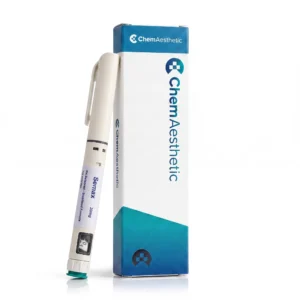
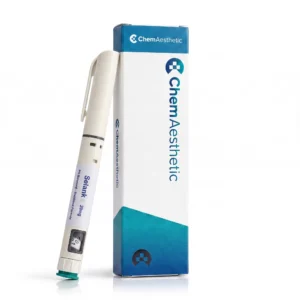
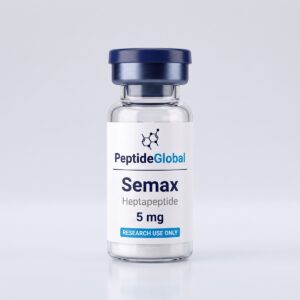
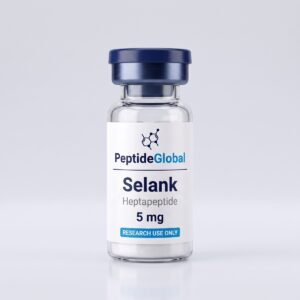
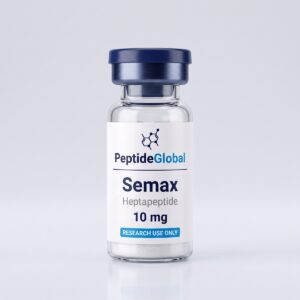
Peptide Global supplies it as the Semax Pen 20 mg: 20 mg pre-mixed in a sealed 3 ml cartridge at 6.67 mg/ml, in a dial-dosing pen device, with no reconstitution step. That is the same fill as the Selank Pen 20 mg, which makes the two directly comparable on a per-increment basis — convenient, since they are frequently studied side by side. Semax versus Selank sets out what separates them.
Storage is 2–8 °C, protected from light and not frozen, for as long as the cartridge is held. See storage and handling.
Common questions
What is Semax?
A synthetic heptapeptide consisting of the ACTH(4–10) fragment of adrenocorticotropic hormone with a proline-glycine-proline sequence attached at the carboxyl end. The fragment carries the properties of interest; the tail makes the molecule resistant to enzymatic cleavage.
Does Semax act like ACTH?
No. It is reported as lacking corticotropic activity, because the residues ACTH needs for its action at the melanocortin type 2 receptor are not all present in the 4–10 fragment. It is an ACTH derivative that is not an ACTH agonist — a fragment is a different molecule, not a weaker version of the parent.
What is Semax studied for in vitro?
Chiefly neurotrophic signalling, with brain-derived neurotrophic factor recurring throughout the literature, and neuroprotection models in neuronal culture subjected to a defined insult. Both are cell-based, and the distance between them and any in-vivo question is considerable.
Is Semax legal in the UK?
Semax holds no UK marketing authorisation and no licensed UK medicine contains it. It was developed in Russia and has been used clinically there, which is sometimes loosely described as approval — but approval in one jurisdiction confers no UK status. Material supplied for in-vitro laboratory research sits outside the medicines framework rather than being prohibited by it. Nothing here is legal advice.
What is the difference between Semax and Selank?
Their parent molecules. Semax derives from a fragment of ACTH; Selank derives from the immune-related tetrapeptide tuftsin. Both are Russian-developed heptapeptides ending in a proline-rich tail, which is why they are often paired, but they descend from unrelated sequences.
Products described in this guide
Supplied for laboratory research use only. UK delivery is £4.95, free on orders over £100, tracked as standard.
Continue reading
Research use only
Every compound named on this page is supplied by Peptide Global strictly for laboratory research use only. Nothing here is for human or veterinary use. These are not foods, supplements or cosmetics, and they are not intended to diagnose, treat, cure or prevent any disease. Nothing on this page is medical, veterinary or legal advice, and no part of it describes administration to a person or an animal.
Purchasers are responsible for their own compliance with applicable law and with the requirements of their institution or ethics committee. At checkout, purchasers confirm they are a qualified researcher aged 18 or over and that they accept the Research-Use-Only Policy and Terms & Conditions.