The two formats
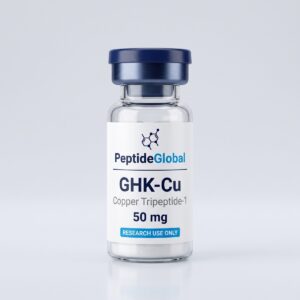
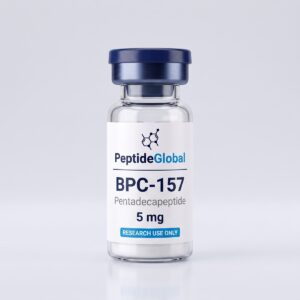
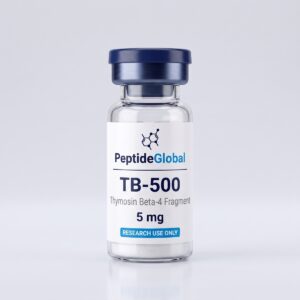
A lyophilised vial holds the peptide as a freeze-dried solid under seal. Before use the researcher adds a diluent — usually bacteriostatic water — dissolves the solid, and thereby creates a solution at whatever concentration the chosen volume produces.
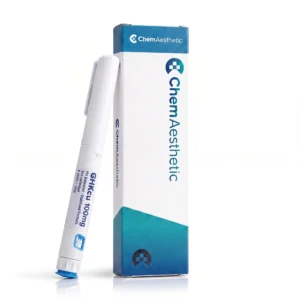
A pre-mixed pen holds the peptide already in solution in a sealed cartridge at a concentration set at manufacture, fitted to a dial mechanism that dispenses a measured volume. Nothing is added and nothing is transferred.
Both formats are in normal use and neither is the correct answer in general. Which is better depends on what the work needs, and the honest summary is that each removes a different problem and creates a different one. Every product in the Peptide Global catalogue is the second format.
Side by side
| Pre-mixed pen | Lyophilised vial | |
|---|---|---|
| State on arrival | Solution | Dry solid |
| Preparation needed | None | Reconstitution |
| Concentration | Fixed at manufacture | Chosen at the bench |
| Shelf life before use | Shorter — solution chemistry runs | Longer — a dry solid is more stable |
| Freezer storage | No, do not freeze a solution | Commonly appropriate for the powder |
| Preparation variability | Removed | Depends on measurement and technique |
| Contamination exposure | Sealed cartridge | Vial accessed, possibly repeatedly |
| Metering | Fixed volume per increment | Whatever the pipette does |
The case for pre-mixed
Reconstitution is a manual operation with several ways to go wrong, and all of them affect the concentration actually achieved rather than announcing themselves. The diluent volume is measured by hand. Incomplete dissolution leaves solid behind. Material is left on a syringe or in a transfer. A vial accessed repeatedly is exposed repeatedly. None of these produce an error message; they produce a solution that is not quite the concentration written on the tube.
A sealed cartridge removes that entire class of problem. The concentration is a property of the product rather than an outcome of a procedure, so it is the same today as it was last month and the same for one researcher as for another. Where reproducibility across a series of experiments matters more than flexibility within one, that is a substantial advantage — and it is the reason the format exists.
The metering is more consistent too. A fixed volume per increment is not subject to pipetting technique. How the pen works sets out the arithmetic that follows from that.
The case for lyophilised
Two real advantages, and they are not small.
Control of concentration. With a powder the researcher decides. If the work needs a stock five times more concentrated than any available cartridge, a powder can supply it and a pre-mixed cartridge cannot. Diluting a dispensed volume downstream is possible but reintroduces exactly the manual step the pen format removed, so the advantage is genuinely given back rather than merely deferred.
Shelf life. A dry solid is considerably more stable than the same peptide in solution. Hydrolysis needs water; deamidation and oxidation proceed far more slowly in a solid. So a lyophilised vial can be held for longer, and freezer storage — inappropriate for a solution, because of the aggregation risks described in the storage guide — is commonly appropriate for a powder. Where material has to sit for months before use, that difference matters.
A third, more situational point: a powder can be dissolved in whatever buffer the experiment requires, which for work sensitive to buffer composition can be decisive. GHK-Cu is the clearest case here, since a copper coordination complex is affected by pH and by competing chelators.
Which to choose
The question that actually decides it is whether the work needs a concentration the cartridge does not provide.
If the available concentration suits the assay, a pre-mixed cartridge is the stronger choice: it removes preparation variability, it is consistent between uses, and the metering is reproducible. If the work needs a specific concentration, an unusual buffer, or material held for a long period before use, a lyophilised powder is the format that can do it.
Two things are true of both formats and are worth not losing sight of. Both are peptides that need cold storage and light protection — the conditions differ in detail, not in kind. And neither format tells you anything about the material in it: format is a packaging decision, and the compound, mass and concentration are the specification, as set out in what to check before ordering.
Common questions
What is the difference between a pre-mixed pen and a lyophilised vial?
State and preparation. A vial holds freeze-dried powder that has to be reconstituted with a diluent before use, and the researcher sets the resulting concentration. A pen holds solution sealed at manufacture at a fixed concentration, with no preparation step.
Which format is better?
Neither in general. A pen removes reconstitution variability and gives consistent metering; a vial gives control of concentration, a longer shelf life and freedom to choose the buffer. The deciding question is usually whether the work needs a concentration the cartridge does not provide.
Why does a lyophilised vial last longer?
Because a dry solid is much more stable than a solution. Hydrolysis requires water, and deamidation and oxidation proceed far more slowly in a solid. That is also why freezer storage is commonly appropriate for a powder but not for a pre-mixed cartridge.
Can I dilute a pre-mixed pen to a lower concentration?
The dispensed volume can be diluted downstream, but doing so reintroduces the manual measuring step the format was chosen to remove, so the advantage is partly given back. Where a specific concentration is required, a powder is the format that can supply it directly.
Which format does Peptide Global supply?
Pre-mixed only. Every product is supplied in a sealed 3 ml cartridge with the compound already in solution at a stated concentration, with no lyophilised powder and no reconstitution step anywhere in the range.
Products described in this guide
Supplied for laboratory research use only. UK delivery is £4.95, free on orders over £100, tracked as standard.
Continue reading
Research use only
Every compound named on this page is supplied by Peptide Global strictly for laboratory research use only. Nothing here is for human or veterinary use. These are not foods, supplements or cosmetics, and they are not intended to diagnose, treat, cure or prevent any disease. Nothing on this page is medical, veterinary or legal advice, and no part of it describes administration to a person or an animal.
Purchasers are responsible for their own compliance with applicable law and with the requirements of their institution or ethics committee. At checkout, purchasers confirm they are a qualified researcher aged 18 or over and that they accept the Research-Use-Only Policy and Terms & Conditions.