Chemical identity
| Designation | Melanotan II |
|---|---|
| CAS number | 121062-08-6 |
| Molecular formula | C50H69N15O9 |
| Molecular weight | 1024.2 g/mol |
| Chain | Cyclic lactam analogue of α-MSH, C-terminal amide |
| Cartridge strength | 20 mg per cartridge |
| Concentration | 6.67 mg/ml |
| Presentation | Pre-mixed solution, sealed 3 ml cartridge |
| Storage | 2–8 °C, protect from light, do not freeze |
Identifiers verified against PubChem in both directions — name to compound record, then each CAS number back again — and, where the sequence is of standard residues, cross-checked by recomputing the molecular weight from the sequence. No purity, HPLC or certificate-of-analysis figure is stated, because no supplier data supports one.
The MHRA has publicly warned against unlicensed tanning products containing melanotan. That warning concerns products sold for use on people. The material described here is supplied strictly for in-vitro laboratory research, is not a tanning product, and is not for human or veterinary use in any form.
What Melanotan II is
Melanotan II, commonly abbreviated MT-2, is a synthetic cyclic analogue of α-melanocyte-stimulating hormone. The native hormone, α-MSH, is a linear peptide derived from proopiomelanocortin — the same precursor protein that yields ACTH and several other signalling peptides.
MT-2 is a shortened and cyclised version of that sequence. The chain is closed into a ring through a lactam bridge between two side chains, which constrains the molecule's shape. That constraint is the design: a cyclic peptide is held closer to the conformation the receptor recognises and is considerably more resistant to the peptidases that would cut a linear chain apart. Cyclisation is a general strategy for making a short peptide behave like a more durable molecule without changing what it binds.
It holds no marketing authorisation in the United Kingdom and no licensed UK medicine contains it. It is supplied here as research material only.
Non-selectivity is the defining feature
There are five known melanocortin receptors, conventionally MC1R through MC5R, and they do different things in different tissues. MC1R is the receptor associated with pigmentation; the others are distributed variously, with MC3R and MC4R prominent in the central nervous system and MC5R in peripheral tissues.
MT-2 activates melanocortin receptors non-selectively — it does not discriminate cleanly between subtypes. That is the single most important fact about it as a research tool, and it cuts both ways. It makes MT-2 a poor instrument for attributing an observation to any one receptor, because activation is not confined to one. And it makes MT-2 the reference point against which selective analogues are characterised: the standard way to demonstrate that a new compound is MC4R-selective is to run it alongside a non-selective agonist across the receptor panel and show the difference.
The family is instructive on how far a small change can go. Related compounds derived from the same α-MSH starting point differ substantially in their receptor preferences, and the differences map onto specific structural features rather than onto overall similarity to the native hormone. Any claim that two melanocortin agonists are broadly equivalent should be treated as a claim about a specific receptor panel under specific conditions.
What is studied in vitro
Receptor pharmacology across the panel is the core activity: cells engineered to express one melanocortin receptor subtype at a time, with cyclic AMP accumulation measured across a concentration range, giving a potency figure per subtype. The set of five figures is the compound's profile, and it is the thing that non-selectivity describes.
Pigment cell work is a second strand — melanocyte and melanoma cell cultures, with melanin content or the activity of the enzymes of melanin synthesis as readouts, addressing MC1R signalling in the cell type where it matters. Structure–activity work comparing linear and cyclic analogues against the same panel is a third, and it is where the contribution of the lactam bridge itself is established.
Stability work — the cyclic analogue against the linear native sequence in the presence of enzyme preparations — demonstrates what the cyclisation buys, which is the same class of experiment as the DPP-4 comparisons used for tesamorelin.
How Melanotan II is supplied in the UK
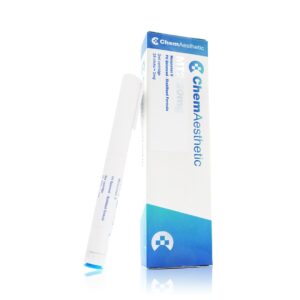
Peptide Global holds UK stock and supplies it as the MT2 Pen 20 mg: 20 mg pre-mixed in a sealed 3 ml cartridge at 6.67 mg/ml, in a dial-dosing pen device, with no reconstitution step. That fill and concentration match the ipamorelin, tesamorelin, Semax and Selank pens.
Storage is 2–8 °C, protected from light and not frozen, for as long as the cartridge is held rather than only in transit. See storage and handling.
To restate the position on this compound, because it is the one in the catalogue most often sought for the wrong reason: this is in-vitro research material. It is not a tanning product, not a cosmetic and not for administration to a person or an animal, and no order is supplied on any other basis. See what research use only actually means.
Common questions
What is Melanotan II?
A synthetic cyclic analogue of α-melanocyte-stimulating hormone, shortened relative to the native sequence and closed into a ring through a lactam bridge. The cyclisation constrains its shape and makes it resistant to the peptidases that would cut a linear chain apart.
What does “non-selective melanocortin agonist” mean?
That it activates the melanocortin receptors without discriminating cleanly between the five subtypes. That makes it a poor tool for attributing an effect to any single receptor, and a useful reference point against which selective analogues are characterised.
Why is MT-2 cyclic?
Because a ring-closed peptide is held closer to the conformation the receptor recognises and resists enzymatic breakdown far better than the equivalent linear chain. It is the same class of design decision as capping a terminus — it changes durability rather than what the molecule binds.
Is Melanotan II legal in the UK?
It holds no UK marketing authorisation and no licensed UK medicine contains it, and the MHRA has publicly warned against unlicensed tanning products containing melanotan — products sold for use on people. Material supplied for in-vitro laboratory research sits outside the medicines framework; nothing here is legal advice.
What strength is the MT2 Pen?
20 mg in a 3 ml cartridge, giving 6.67 mg/ml, the same fill as the ipamorelin, tesamorelin, Semax and Selank pens.
Products described in this guide
Supplied for laboratory research use only. UK delivery is £4.95, free on orders over £100, tracked as standard.
Continue reading
Research use only
Every compound named on this page is supplied by Peptide Global strictly for laboratory research use only. Nothing here is for human or veterinary use. These are not foods, supplements or cosmetics, and they are not intended to diagnose, treat, cure or prevent any disease. Nothing on this page is medical, veterinary or legal advice, and no part of it describes administration to a person or an animal.
Purchasers are responsible for their own compliance with applicable law and with the requirements of their institution or ethics committee. At checkout, purchasers confirm they are a qualified researcher aged 18 or over and that they accept the Research-Use-Only Policy and Terms & Conditions.