Chemical identity
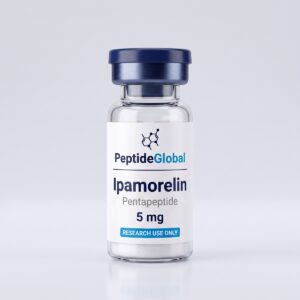
| Designation | Ipamorelin |
|---|---|
| CAS number | 170851-70-4 |
| Molecular formula | C38H49N9O5 |
| Molecular weight | 711.9 g/mol |
| Chain | Pentapeptide, contains non-standard residues, C-terminal amide |
| Cartridge strength | 20 mg per cartridge |
| Concentration | 6.67 mg/ml |
| Presentation | Pre-mixed solution, sealed 3 ml cartridge |
| Storage | 2–8 °C, protect from light, do not freeze |
Identifiers verified against PubChem in both directions — name to compound record, then each CAS number back again — and, where the sequence is of standard residues, cross-checked by recomputing the molecular weight from the sequence. No purity, HPLC or certificate-of-analysis figure is stated, because no supplier data supports one.
What ipamorelin is
Ipamorelin is a synthetic pentapeptide — five amino acid residues — that acts as an agonist at the growth hormone secretagogue receptor, more commonly called the ghrelin receptor and abbreviated GHS-R1a. It is a small molecule by peptide standards, and it includes non-natural residues rather than being assembled from the twenty standard amino acids alone, which is part of why it resists enzymatic breakdown better than a comparable natural sequence would.
It belongs to a family of compounds developed from the growth hormone-releasing peptides of the 1980s and 1990s. Those earlier sequences activated the same receptor but were not clean in their effects, and the design brief for the generation ipamorelin belongs to was selectivity: activate the receptor without the accompanying endocrine activity the earlier compounds produced.
Ipamorelin holds no marketing authorisation in the United Kingdom or, so far as we are aware, anywhere else; its clinical development was discontinued. It is supplied here as research material only.
Secretagogue, not an analogue
The distinction between a secretagogue and a hormone analogue is the single most useful thing to understand about this compound, and it separates ipamorelin from tesamorelin even though both are described as acting on the growth hormone axis.
A secretagogue acts on the receptor for ghrelin — a distinct receptor, with its own signalling — and its effect on growth hormone is indirect, mediated through that pathway. An analogue such as tesamorelin resembles growth hormone-releasing hormone and acts at the GHRH receptor, which is the receptor the hypothalamic signal itself uses. Two different receptors, two different points of entry to the same axis. Neither is a substitute for the other in an experiment, and a result obtained with one cannot be attributed to the other.
Nor is either of them growth hormone. Neither compound is a growth hormone analogue and neither acts at the growth hormone receptor; both act upstream of it.
Why selectivity is the point
Ipamorelin's place in the literature rests on selectivity. Earlier growth hormone secretagogues activated the ghrelin receptor but were also reported to raise adrenocorticotropic hormone, cortisol and prolactin, which made interpreting any observed effect difficult: an experiment could not easily separate what followed from receptor activation itself from what followed from the accompanying hormonal changes.
Ipamorelin was characterised as producing markedly less of that accompanying activity — a cleaner activation of the target receptor. Whether one describes that as a difference in degree or in kind depends on the study, and the comparisons in the literature were made against specific earlier compounds under specific conditions rather than as a general property. The claim worth taking from it is narrow and useful: selectivity relative to named predecessors, established in defined preparations.
For in-vitro work, selectivity is what makes a compound a usable tool. A ligand that activates one receptor and little else lets an experiment attribute an observation to that receptor.
What is studied in vitro
Receptor binding and functional assays at GHS-R1a are the core: displacement of a labelled ligand to establish affinity, and a downstream signalling readout — calcium mobilisation or inositol phosphate accumulation for this receptor — across a concentration range to establish potency. Selectivity is then established by running the same compound against a panel of unrelated receptors and confirming the absence of activity.
Beyond that, pituitary cell preparations are used to measure growth hormone release in response to the compound directly, which is the readout the compound class is named for. Stability work in the presence of enzyme preparations, and structure–activity comparisons across the family of related pentapeptides, complete the usual picture.
How it is supplied
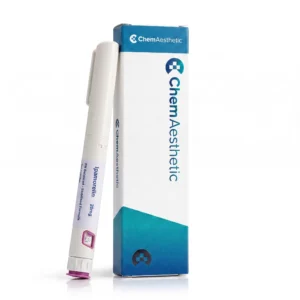
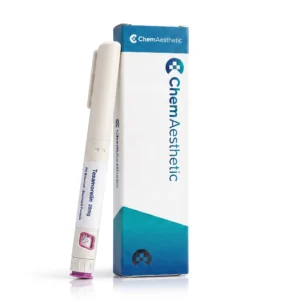
Peptide Global supplies it as the Ipamorelin Pen 20 mg: 20 mg pre-mixed in a sealed 3 ml cartridge at 6.67 mg/ml, in a dial-dosing pen device, with no reconstitution step. That is the same fill and concentration as the tesamorelin, Semax, Selank and MT2 pens, which makes those five directly comparable on a per-increment basis.
Storage is 2–8 °C, protected from light and not frozen, for as long as the cartridge is held rather than only in transit. See storage and handling and, for how the cartridge and dial relate, how the pen works.
Common questions
What is ipamorelin?
A synthetic pentapeptide that acts as an agonist at the ghrelin receptor, GHS-R1a. It belongs to the growth hormone secretagogue family and was developed with selectivity as its design goal, incorporating non-natural residues that help it resist enzymatic breakdown.
Is ipamorelin a growth hormone?
No. It is not growth hormone and not a growth hormone analogue, and it does not act at the growth hormone receptor. It acts at the ghrelin receptor, which sits upstream of growth hormone release.
What is the difference between ipamorelin and tesamorelin?
The receptor each one uses. Ipamorelin is a secretagogue acting at the ghrelin receptor; tesamorelin is a GHRH analogue acting at the GHRH receptor. Both engage the growth hormone axis, but at different entry points, so they are not interchangeable in an experiment.
Why is ipamorelin described as selective?
Because earlier growth hormone secretagogues were reported to also raise ACTH, cortisol and prolactin, which confounded interpretation, and ipamorelin was characterised as producing markedly less of that accompanying activity. The comparison was made against specific predecessors under specific conditions rather than as a general claim.
What strength is the Ipamorelin Pen?
20 mg in a 3 ml cartridge, giving 6.67 mg/ml — the same fill and concentration as the tesamorelin, Semax, Selank and MT2 pens.
Is ipamorelin legal in the UK?
Ipamorelin holds no UK marketing authorisation — its clinical development was discontinued, so no licensed medicine contains it. Material supplied for in-vitro laboratory research sits outside the medicines framework rather than being prohibited by it, and is routinely held by laboratories. Whether a specific purchase is permitted also turns on the buyer's own institutional rules, which are often a stricter test than the law. Nothing here is legal advice.
Products described in this guide
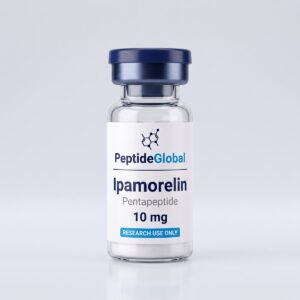
Supplied for laboratory research use only. UK delivery is £4.95, free on orders over £100, tracked as standard.
Continue reading
Research use only
Every compound named on this page is supplied by Peptide Global strictly for laboratory research use only. Nothing here is for human or veterinary use. These are not foods, supplements or cosmetics, and they are not intended to diagnose, treat, cure or prevent any disease. Nothing on this page is medical, veterinary or legal advice, and no part of it describes administration to a person or an animal.
Purchasers are responsible for their own compliance with applicable law and with the requirements of their institution or ethics committee. At checkout, purchasers confirm they are a qualified researcher aged 18 or over and that they accept the Research-Use-Only Policy and Terms & Conditions.