Labs studying a multi-peptide combination rather than single agents, supplied at a fixed ratio so the proportions cannot vary between preparations.
A multi-component blend. Each component is preclinical only, with no regulatory approval in any territory. BPC-157 has been on the WADA Prohibited List (S0) since 2022.
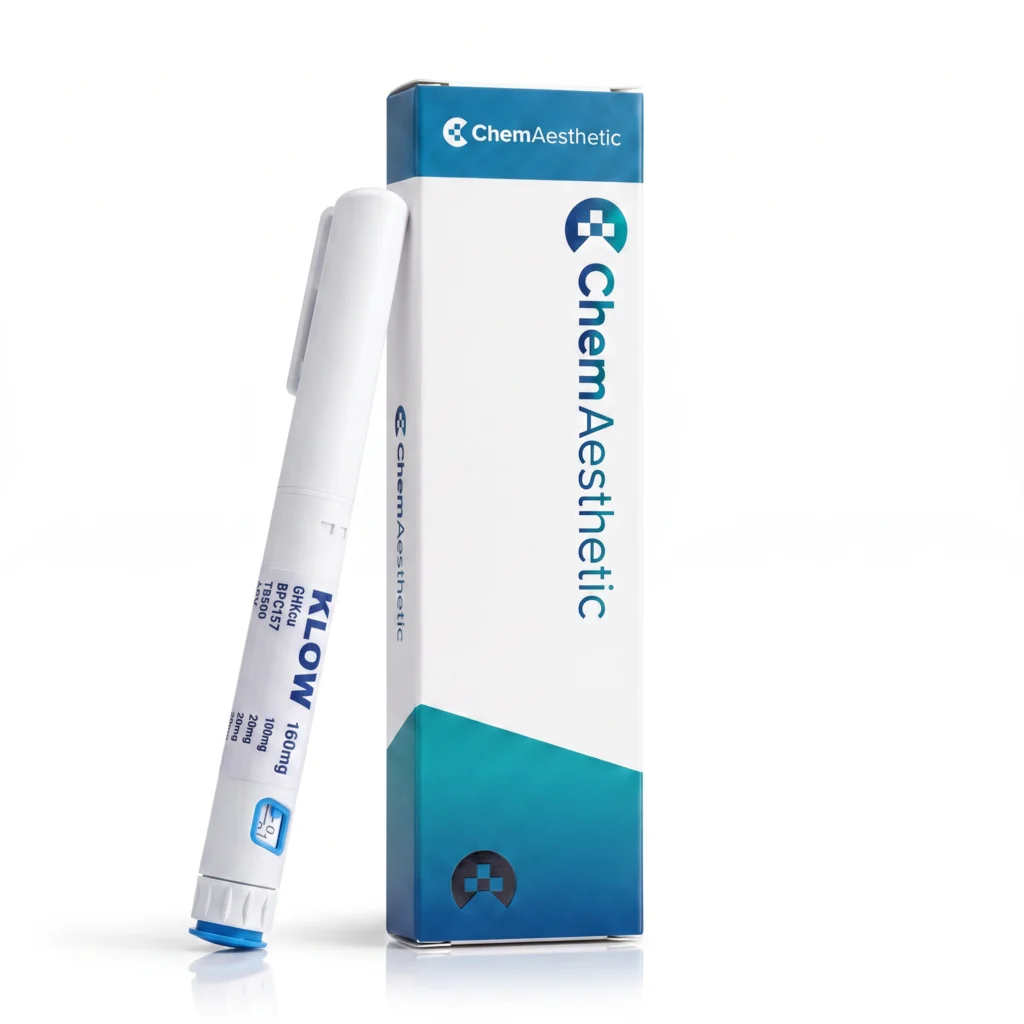
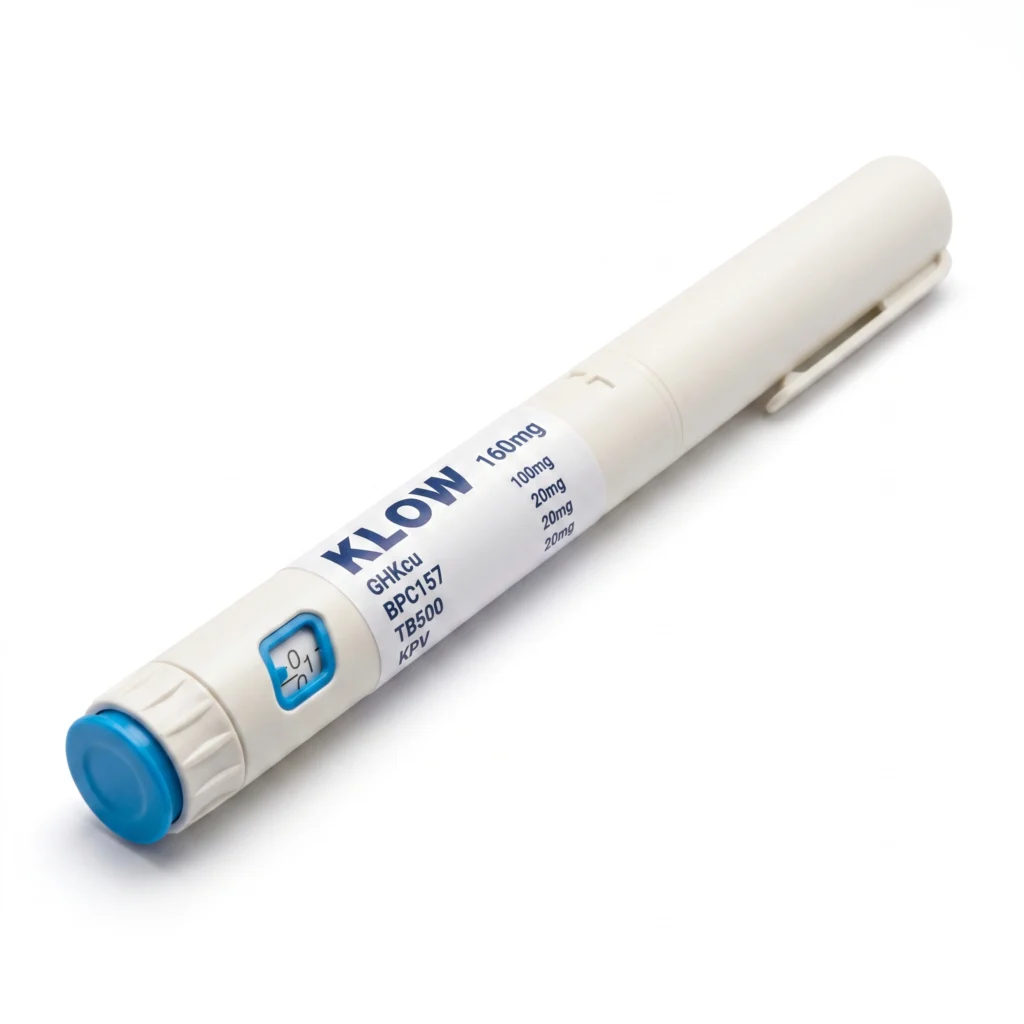
KLOW Peptide Pen (GHK-Cu, BPC-157, TB-500 & KPV) | 160mg
Held and dispatched from the UK — cold chain from storage to door Held & dispatched from the UK
160 mg KLOW Blend (GHK-Cu / BPC-157 / TB-500 / KPV) in a pre-mixed 3 ml cartridge. Multi-peptide blend. For laboratory research use only.
- Pre-mixed, no reconstitution required
- Sealed pharmaceutical pack
- UK delivery £4.95, free over £100
Bulk order & save
94 in stock · ready to dispatch
Same-day dispatch on orders placed before 2pm, Monday to Friday.
Product description
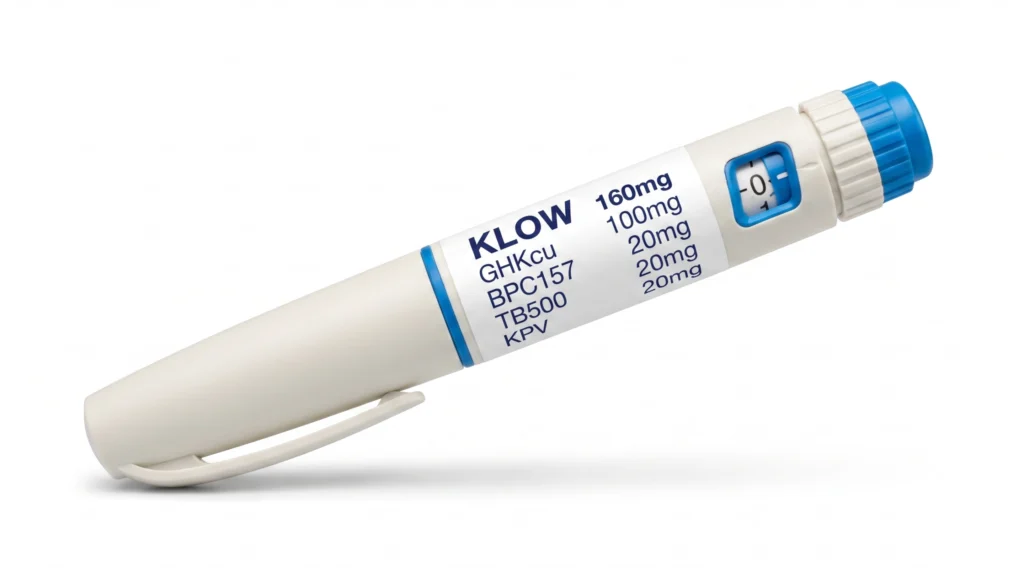
KLOW — also written KLOW Blend or the KLOW stack — is a four-peptide preparation supplied pre-mixed in a 3 ml stabilised cartridge. Each cartridge holds 160 mg in total: GHK-Cu 100 mg, BPC-157 20 mg, TB-500 20 mg and KPV 20 mg. The ratio is fixed when the cartridge is filled, so it is identical in every unit of a fill and does not depend on how the material is handled afterwards.
What is in the KLOW pen
The name is an acronym of its components, which is why it is spelled inconsistently across the market. All four are peptides normally bought as separate vials.
- GHK-Cu 100 mg (CAS 89030-95-5) — glycyl-L-histidyl-L-lysine complexed with copper(II). A tripeptide carrier for copper rather than a copper salt, and by a wide margin the largest component by mass.
- BPC-157 20 mg (CAS 137525-51-0) — a synthetic pentadecapeptide, sequence GEPPPGKPADDAGLV, originally identified from a protein fraction in gastric juice. It does not occur naturally in the body as this peptide.
- TB-500 20 mg (CAS 885340-08-9) — the acetylated actin-binding fragment of thymosin β4, Ac-LKKTETQ, and not the full 43-residue protein. This distinction is frequently blurred in product listings.
- KPV 20 mg (CAS 67727-97-3) — Lys-Pro-Val, the C-terminal tripeptide of α-melanocyte-stimulating hormone. The smallest fragment of α-MSH retaining activity in the assays it is studied in.
KLOW or Glow: what actually differs
These two blends are constantly confused, and the difference is simple. Glow is GHK-Cu, BPC-157 and TB-500. KLOW is the same three plus KPV. The K is the only variable.
- Glow Peptide Pen — 140 mg total: GHK-Cu 100, BPC-157 20, TB-500 20.
- KLOW Peptide Pen — 160 mg total: GHK-Cu 100, BPC-157 20, TB-500 20, KPV 20.
The three shared components sit at identical masses in both, so a comparison between the two isolates KPV as the single experimental variable — which is the only reason to run them side by side.
What KPV contributes
KPV is the C-terminal tripeptide of α-MSH, the sequence Lys-Pro-Val. α-MSH is a 13-residue melanocortin hormone; KPV is residues 11 to 13. It is studied because it appears to retain part of the parent hormone's activity in anti-inflammatory assays while being far too short to act as a melanocortin receptor agonist in the conventional sense, which makes its mechanism a question in its own right rather than a settled matter. In laboratory work it appears in epithelial barrier models and in cytokine expression studies.
For the melanocortin agonist proper rather than a fragment of it, see Melanotan II Pen 20mg.
KLOW pen: the same thing under a shorter name
Most people searching for this product type “klow pen” rather than the full compound name, and the two mean the same thing. A klow pen is a pre-filled the KLOW blend cartridge in a dial-dosing pen, as opposed to lyophilised powder in a vial.
This pen holds 160 mg in a sealed 3 ml cartridge. The dial is graduated at 6 clicks = GHK-Cu 2 mg / BPC-157 0.4 mg / TB-500 0.4 mg / KPV 0.4 mg. Those are device figures — what the mechanism displaces, not what should be dispensed.
Applications in research
- Multi-peptide interaction. Work asking whether four peptides acting on partly overlapping processes behave additively in a shared assay, which requires them present at a known and constant ratio.
- Copper delivery and homeostasis. GHK-Cu at 100 mg dominates the blend by mass, so copper-ligand chemistry and intracellular copper handling are the natural framing for the bulk of the material.
- Cytoskeletal and extracellular-matrix endpoints. TB-500 sequesters actin and BPC-157 appears in cytoprotection and angiogenic signalling assays; the shared readouts are cell migration and matrix protein synthesis.
- Cross-pathway comparison against Glow. Running the four-peptide and three-peptide preparations in parallel isolates KPV, since every other component and mass is held constant.
Human evidence for these peptides is limited. For BPC-157 it remains confined to small uncontrolled series; for KPV and TB-500 it is essentially preclinical. That is the state of the literature, and it describes the molecules rather than this product.
Legal status and testing in sport
None of the four components holds an MHRA marketing authorisation, and none is a licensed medicine in the United Kingdom. None is a controlled drug under the Misuse of Drugs Act 1971, so buying and possessing them for laboratory research is lawful; supplying them for human or veterinary consumption is not, and would engage the Human Medicines Regulations 2012.
One point worth flagging for anyone working near regulated sport: BPC-157 has appeared on the WADA Prohibited List under S0 (non-approved substances) since 2022, and TB-500 falls under S2 as a growth factor. That is a doping-control matter, not a legality matter, and it applies to the substances irrespective of the format they are supplied in.
What you are actually comparing between listings
KLOW listings are hard to compare because the name says nothing about the mass. Three things decide it:
- Total mass. This cartridge holds 160 mg. The near-universal presentation elsewhere is 80 mg, so one unit here carries double the peptide of a standard KLOW listing. Check the total before comparing anything else.
- Format. Pre-mixed solution against lyophilised powder. For a four-peptide blend that difference compounds: reconstituting a blend means the ratio between four components now depends on your own handling, whereas here it is fixed at fill.
- Cost per milligram. At £160 for 160 mg this works out at £1.00 per mg. Against an 80 mg cartridge at a similar headline price, that is half the cost per milligram.
The individual components are also available on their own: GHK-Cu Pen 100mg and BPC-157 + TB-500 Pen 40mg.
Handling and storage
Store at 2–8 °C and protect from light. Keep the cartridge sealed until use, then upright, and observe aseptic technique. Do not freeze: freeze–thaw cycling is the usual cause of aggregation in peptide solutions, and in a four-component blend it risks the components coming out of solution unequally, which changes the ratio the blend exists to hold constant. Orders placed before 2pm are dispatched the same working day, cold-packed, in plain outer packaging.
References
Literature on the individual components. These describe the molecules, not this product, and none constitutes a claim about it.
- Pickart L, Margolina A. Regenerative and Protective Actions of the GHK-Cu Peptide in the Light of the New Gene Data. Int J Mol Sci. 2018;19(7):1987. PMID 29986520.
- Pickart L, Vasquez-Soltero JM, Margolina A. GHK Peptide as a Natural Modulator of Multiple Cellular Pathways in Skin Regeneration. Biomed Res Int. 2015;2015:648108. PMID 26236730.
- Sikiric P, Rucman R, Turkovic B, et al. Stable Gastric Pentadecapeptide BPC 157, Robert's Stomach Cytoprotection/Adaptive Cytoprotection/Organoprotection, and Selye's Stress Coping Response. Gut Liver. 2020;14(2):153–67. PMID 31158953.
- Goldstein AL, Hannappel E, Kleinman HK. Thymosin β4: actin-sequestering protein moonlights to repair injured tissues. Trends Mol Med. 2005;11(9):421–9. PMID 16099219.
- Huff T, Muller CSG, Otto AM, et al. β-Thymosins, small acidic peptides with multiple functions. Int J Biochem Cell Biol. 2001;33(3):205–20. PMID 11311852.
Research use only
KLOW Blend is supplied strictly for in-vitro research and analytical purposes. It is not for human or veterinary administration and not for any diagnostic or therapeutic application. No component holds an MHRA marketing authorisation. Confirm the current regulatory position of each component before drafting institutional documentation, and clear the material through your own ethics, COSHH and biosafety processes before ordering.
Specifications
| Compound | KLOW Blend (GHK-Cu / BPC-157 / TB-500 / KPV) |
|---|---|
| Class | Multi-peptide blend |
| Components | GHK-Cu (CAS 89030-95-5) 100 mg; BPC-157 (CAS 137525-51-0) 20 mg; TB-500 (CAS 885340-08-9) 20 mg; KPV (CAS 67727-97-3) 20 mg |
| Strength | 160 mg per cartridge |
| Format | Pre-mixed dosing pen |
| Cartridge volume | 3 ml |
| Formulation | pH-balanced, stabilised |
| Storage | 2–8 °C, protect from light |
| Dose graduation | 6 clicks = GHK-Cu 2 mg / BPC-157 0.4 mg / TB-500 0.4 mg / KPV 0.4 mg |
| Also known as | KLOW blend pen, KLOW 160, K-Glow pen, KGlow peptide pen |
| SKU | PG-KLOW-PEN-160 |
Storage and handling
| Reconstitution | Not required. Supplied pre-mixed in solution. |
|---|---|
| Sealed, as supplied | 2–8 °C, protect from light. Do not freeze. |
| Once in use | Return to refrigerated storage between use. Keep the cartridge upright. |
| Before dispensing | Allow the cartridge to reach room temperature. Do not shake. |
Frequently asked questions
What is the KLOW Peptide Pen?
The KLOW Peptide Pen is KLOW Blend (GHK-Cu / BPC-157 / TB-500 / KPV) supplied pre-mixed in a 3 ml dial-dosing cartridge rather than as lyophilised powder in a vial, so there is no reconstitution step. It is supplied for laboratory research use only.
How many clicks per increment on the KLOW Peptide Pen 160mg?
The dial is graduated at 6 clicks = GHK-Cu 2 mg / BPC-157 0.4 mg / TB-500 0.4 mg / KPV 0.4 mg. Because the components are combined at a ratio fixed at manufacture, one click dispenses all of them together in that proportion — they cannot be varied independently. Protocol design is a matter for the researcher.
How much is the KLOW Peptide Pen 160mg?
KLOW Peptide Pen 160mg is £160.00. UK delivery is £4.95, free on orders over £100, tracked as standard.
What strength is the KLOW Peptide Pen?
Each cartridge holds 160 mg. The cartridge volume is 3 ml.
How is the KLOW Peptide Pen dial graduated?
The dial is graduated at 6 clicks = GHK-Cu 2 mg / BPC-157 0.4 mg / TB-500 0.4 mg / KPV 0.4 mg, so the same volume can be dispensed repeatably between measurements.
Does the KLOW Peptide Pen need reconstituting?
No. This is supplied as a pre-mixed pen, so there is no manual reconstitution step and no handling variability between preparations.
How should the KLOW Peptide Pen be stored?
Store at 2–8 °C, protect from light. Once in use, keep the cartridge upright and observe aseptic handling practice.
How quickly is the KLOW Peptide Pen dispatched?
Orders placed before 2pm are dispatched the same working day, cold-packed in thermal-insulated, tamper-evident packaging.
Is KLOW the same as K-Glow?
KLOW is sometimes written K-Glow or KGlow, and in this catalogue all three mean the same four-peptide blend: GHK-Cu 100 mg plus BPC-157, TB-500 and KPV at 20 mg each, 160 mg in one 3 ml cartridge. Other suppliers may use the names differently, so check the component list rather than the name.
What is the difference between the KLOW pen and the Glow pen?
KLOW adds KPV to the three Glow components. Both hold GHK-Cu 100 mg, BPC-157 20 mg and TB-500 20 mg; KLOW adds KPV 20 mg, taking the total from 140 mg to 160 mg.
Is the KLOW Peptide Pen for human use?
No. Everything supplied by Peptide Global is strictly an in-vitro research compound for laboratory research professionals. It is not for human or veterinary use.

Shipping & handling
- Order before 2pm GMT for same-working-day dispatch
- Tracked UK next-day · tracked EU & worldwide options
- Cold-packed in thermal, tamper-evident packaging
- Thermal-insulated, tamper-evident outer box
The peptides in this blend, on their own
-
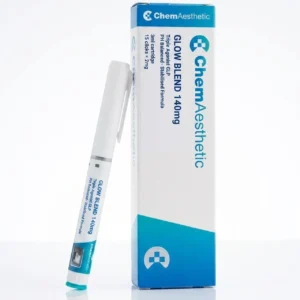 Glow Peptide Pen 140mg
£140.00
Glow Peptide Pen 140mg
£140.00
-
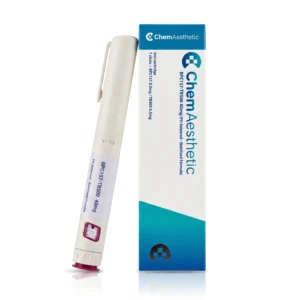 Wolverine Stack Pen 40mg (BPC-157 + TB-500)
£125.00
Wolverine Stack Pen 40mg (BPC-157 + TB-500)
£125.00
-
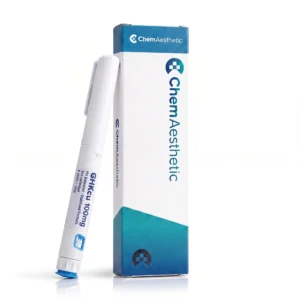 GHK-Cu Pen 100mg (Copper Peptide)
£90.00
GHK-Cu Pen 100mg (Copper Peptide)
£90.00
-
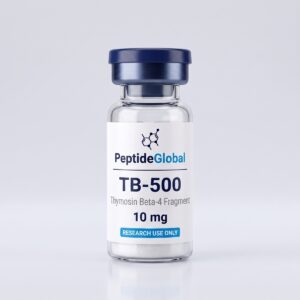 TB-500 10mg Vial
£49.99
TB-500 10mg Vial
£49.99
Guides on this compound
Reference material on what this compound is, how the pre-mixed format works, and the conditions it is held under. Written for laboratory researchers.
- What is KLOW peptide? 4 min read
- Glow vs KLOW: what is the difference? 4 min read
- What is the Glow peptide blend? 5 min read
- What is the Wolverine stack? 6 min read