The difference in one line
KLOW is the Glow blend with a fourth peptide added. Both hold GHK-Cu 100 mg, BPC-157 20 mg and TB-500 20 mg. KLOW adds KPV at 20 mg, which takes the total from 140 mg to 160 mg. That is the whole of the difference between them.
The names cause more confusion than the contents. KLOW is also written K-Glow or KGlow, Glow is also sold as the Glow stack or Glow blend, and none of these names is standardised. Another supplier's Glow or KLOW may hold a different ratio or a different component, and there is no definition against which either would be wrong. The component list is the specification; the name is a label on top of it.
Side by side
| Glow | KLOW | |
|---|---|---|
| Also sold as | Glow stack, Glow blend | K-Glow, KGlow, KLOW blend |
| GHK-Cu | 100 mg | 100 mg |
| BPC-157 | 20 mg | 20 mg |
| TB-500 | 20 mg | 20 mg |
| KPV | None | 20 mg |
| Total peptide | 140 mg | 160 mg |
| Cartridge | 3 ml, pre-mixed | 3 ml, pre-mixed |
| Total concentration | 46.67 mg/ml | 53.33 mg/ml |
| Storage | 2–8 °C, protect from light | 2–8 °C, protect from light |
Because the shared three components are present at the same mass in the same volume, their concentrations are identical in both pens: 33.33 mg/ml of GHK-Cu and 6.67 mg/ml each of BPC-157 and TB-500. KPV's 20 mg adds to the total without diluting anything else.
What KPV adds
KPV is a tripeptide of lysine, proline and valine, the carboxyl-terminal end of α-melanocyte-stimulating hormone. In vitro it appears mainly in inflammation models: cytokine production in stimulated cell cultures, and epithelial barrier models where inflammatory signalling is the readout. It is generally reported as not acting through the melanocortin receptors responsible for α-MSH's pigmentary effects.
So the practical choice between the two pens comes down to whether KPV belongs in the work. If it does, KLOW is the only way to get it here, because Peptide Global does not supply KPV on its own. If it does not, Glow is the same blend without it, and leaving KPV out removes one more component that an observation might otherwise be attributed to. More detail is in what is KLOW.
The wider family: Wolverine and GHK-Cu pens
Glow and KLOW sit at the top of a family of four pens built from the same components. Reading them as one set makes the choice clearer than comparing any two in isolation.
| Pen | Components | Total |
|---|---|---|
| GHK-Cu Pen | GHK-Cu 100 mg | 100 mg |
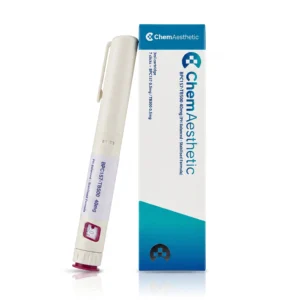
| Wolverine Stack Pen | BPC-157 20 mg, TB-500 20 mg | 40 mg |
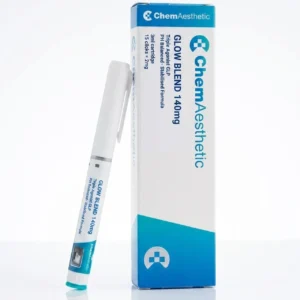
| Glow Peptide Pen | GHK-Cu 100 mg, BPC-157 20 mg, TB-500 20 mg | 140 mg |
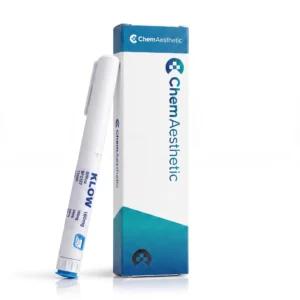
| KLOW Peptide Pen | GHK-Cu 100 mg, BPC-157 20 mg, TB-500 20 mg, KPV 20 mg | 160 mg |
Put another way: Glow is the GHK-Cu pen and the Wolverine stack in one cartridge, and KLOW is Glow plus KPV. Every component appears at the same concentration wherever it appears, so the single-component and two-component pens work as controls for the larger blends. Running a blend alongside the pens that make it up is the usual way to deal with the attribution problem any mixture has, set out in blends versus single compounds.
Comparing the two on price
A price per milligram of total peptide is easy to calculate and misleading to compare. GHK-Cu makes up 100 mg of each cartridge and the other components are costlier per milligram, so the headline figure mostly reflects the mix rather than value. The fairer comparison is component by component: the GHK-Cu, BPC-157 and TB-500 content is identical in both pens, so the difference in price between them is the price of 20 mg of KPV. Current prices are on each product page.
Handling is the same for both
A blend inherits the strictest handling requirement of any of its components, and in both pens that is set by GHK-Cu, a copper complex sensitive to pH, competing chelators and light. The stated conditions for both are 2–8 °C, protected from light and not frozen, for as long as the cartridge is held. Orders leave cold-packed, which covers the journey only. See how to store research peptides.
Common questions
What is the difference between Glow and KLOW?
KLOW adds KPV. Both hold GHK-Cu 100 mg, BPC-157 20 mg and TB-500 20 mg in a 3 ml cartridge; KLOW adds KPV at 20 mg, giving 160 mg of total peptide against Glow's 140 mg.
Is K-Glow the same as KLOW?
K-Glow and KGlow are alternative spellings of KLOW, and in this catalogue all three mean the same four-peptide blend. Blend names are not standardised across suppliers, so the component list is a safer check than the name.
Is the Glow stack the same as the Glow pen?
Yes. Glow stack and Glow blend are market names for the same three-peptide combination the Glow Peptide Pen holds: GHK-Cu, BPC-157 and TB-500.
Which is stronger, Glow or KLOW?
Neither, in the sense the question usually means. The three shared components are at identical concentrations in both pens. KLOW holds more total peptide only because it contains a fourth compound.
How do Glow and KLOW relate to the Wolverine stack?
The Wolverine stack is BPC-157 and TB-500 at 20 mg each. Glow is those two plus GHK-Cu 100 mg, and KLOW is Glow plus KPV 20 mg.
Can I buy KPV separately?
Not from Peptide Global. KPV appears only as a component of the KLOW pen. GHK-Cu is available on its own as the GHK-Cu Pen, and BPC-157 and TB-500 together as the Wolverine Stack Pen.
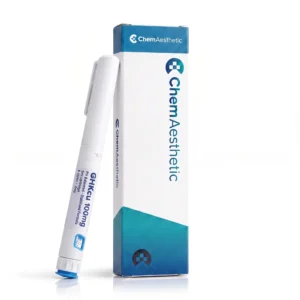
Products described in this guide
Supplied for laboratory research use only. UK delivery is £4.95, free on orders over £100, tracked as standard.
Continue reading
Research use only
Every compound named on this page is supplied by Peptide Global strictly for laboratory research use only. Nothing here is for human or veterinary use. These are not foods, supplements or cosmetics, and they are not intended to diagnose, treat, cure or prevent any disease. Nothing on this page is medical, veterinary or legal advice, and no part of it describes administration to a person or an animal.
Purchasers are responsible for their own compliance with applicable law and with the requirements of their institution or ethics committee. At checkout, purchasers confirm they are a qualified researcher aged 18 or over and that they accept the Research-Use-Only Policy and Terms & Conditions.